
As Man Thinketh (1903) is more than a century old, and it shows. James Allen, the author of the supposed self-help book, harbors on the idea that circumstances are products of mindset: “A man does not come to the almshouse or the jail by the tyranny of fate or circumstance but by the pathway of groveling thoughts and base desires.” Moreover, Allen argues that one can choose how to think and, therefore, can shape his destiny: “A man cannot directly choose his circumstances, but he can choose his thoughts, and so indirectly, yet surely, shape his circumstances.” His adage “So You will be what you will be” is catchy and has its merits but is generally a poorly put generalization in modern self-development studies.
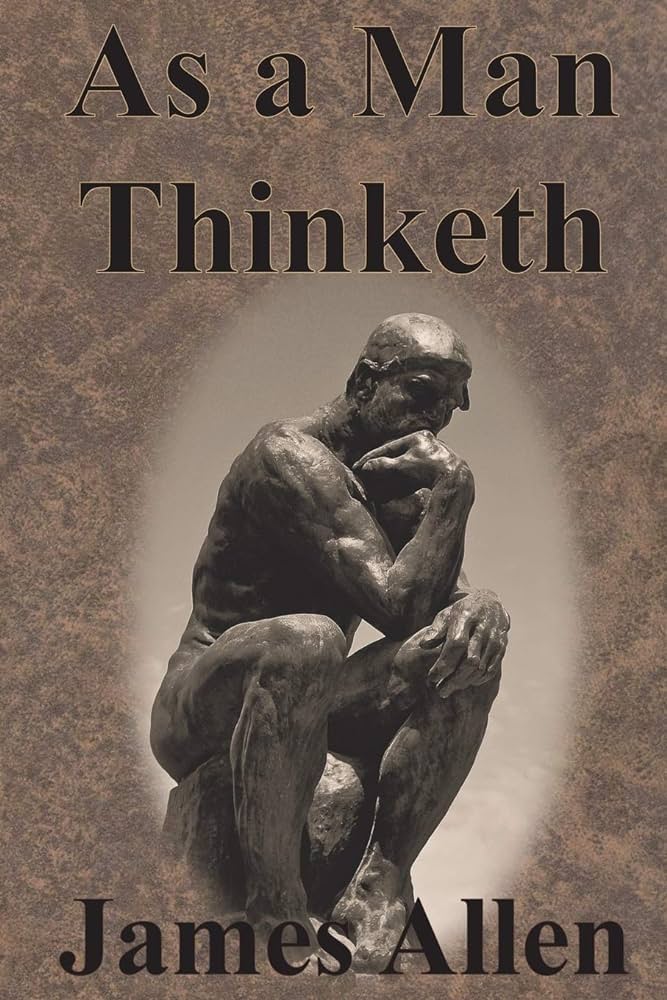
Since Allen often discusses the relationship between thought and circumstances, he believes in free will. However, he also illustrated how thoughts could live independently, and intervention is crucial to make thoughts pre-requisites for ideal circumstances: “Man’s mind may be likened to a garden, which may be intelligently cultivated or allowed to run wild; but whether cultivated or neglected, it must, and will, bring forth. If no useful seeds are put into it, then an abundance of useless weed-seeds will fall therein and will continue to produce their kind.” This argument leans towards compatibilism as Allen shows the importance of “cultivation” (free will) and the probability of the “garden running wild” (determinism).
While I disagree with him about the relationship between thought and circumstances, I like how he advocates for the serenity of the mind: “Calmness of mind is one of the beautiful jewels of wisdom. It is the result of long and patient effort in self-control. Its presence is an indication of ripened experience and of a more than ordinary knowledge of the laws and operations of thought. The strong, calm man is always loved and revered. He is like a shade-giving tree in a thirsty land or a sheltering rock in a storm.” Of course, he puts a premium on a calm mind because he believes it will bring forth an ideal set of circumstances. However, a calm mind cannot alter generational circumstances, let alone social institutions. The book is easy and a great companion for self-reflection, but it cannot be used to defend against ineffective institutions and mass movements.
 Migo Aguado