
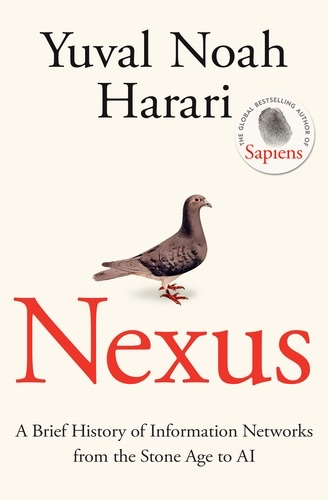
Yuval Noah Harari’s Nexus is an examination of history and the forces that have steered humanity along particular paths at critical junctures. The book draws attention to the recurring tension between conflict and cooperation. Harari’s central thesis is that, despite the violence and division that have marked much of human history, the arc of history bends toward ever-increasing collaboration and interdependence—provided this trajectory is pursued intentionally. He offers a cautious optimism about what lies ahead, particularly in the age of artificial intelligence.
The Veneer Theory, proposed by primatologist Frans de Waal, offers a contrasting view. It suggests that beneath the surface of civilization, humans remain fundamentally Stone Age hunters, governed by primal instincts and self-interest. Harari challenges this notion, arguing that the story of humanity is not one of constant strife but of expanding circles of cooperation—from small hunter-gatherer bands to vast global networks. This debate echoes the observations of sociobiologist Edward O. Wilson, as quoted in Jeffrey Sachs’ The Ages of Globalization: “Humanity has Paleolithic emotions, medieval institutions, and godlike technology.” Both de Waal and Wilson caution that our evolutionary heritage can undermine progress, especially when institutions and technologies outpace our ability to regulate behavior. Yet Harari’s optimism about cooperation suggests that we are not prisoners of our biology but agents of change, capable of overcoming ancient impulses through shared norms and institutions.
In light of these perspectives, the imperative to strengthen United Nations Sustainable Development Goal 17—Partnerships for the Goals—becomes ever more urgent. As humanity confronts the twin challenges of maximizing benefits and regulating artificial intelligence, fostering robust global cooperation is essential to ensure that technological advances serve the common good rather than exacerbate division. Harari warns that emerging spheres of division could manifest as artificial intelligence–driven realities—a “Silicon Curtain” reminiscent of the wartime “Iron Curtain.” Born from the trauma of a world war, the United Nations must now evolve into an institution capable of preventing a post–artificial intelligence implosion of humanity.
 Migo Aguado