
The Book of Hope: A Survival Guide for Trying Times explores hope as an active, rational response to the world’s harsh realities rather than a passive or naive belief. The highlights show that hope extends beyond personal desires to collective aspirations, such as improving communities, protecting the environment, and electing better leaders. Jane Goodall, a primatologist and anthropologist, frames hope through four key sources: human intellect, nature’s resilience, the energy of young people, and the indomitable human spirit. The book also emphasizes that humans are uniquely capable of both great evil and profound altruism, making our choices central to shaping the future. By grounding hope in action and responsibility, it becomes a tool for confronting global challenges rather than escaping them.
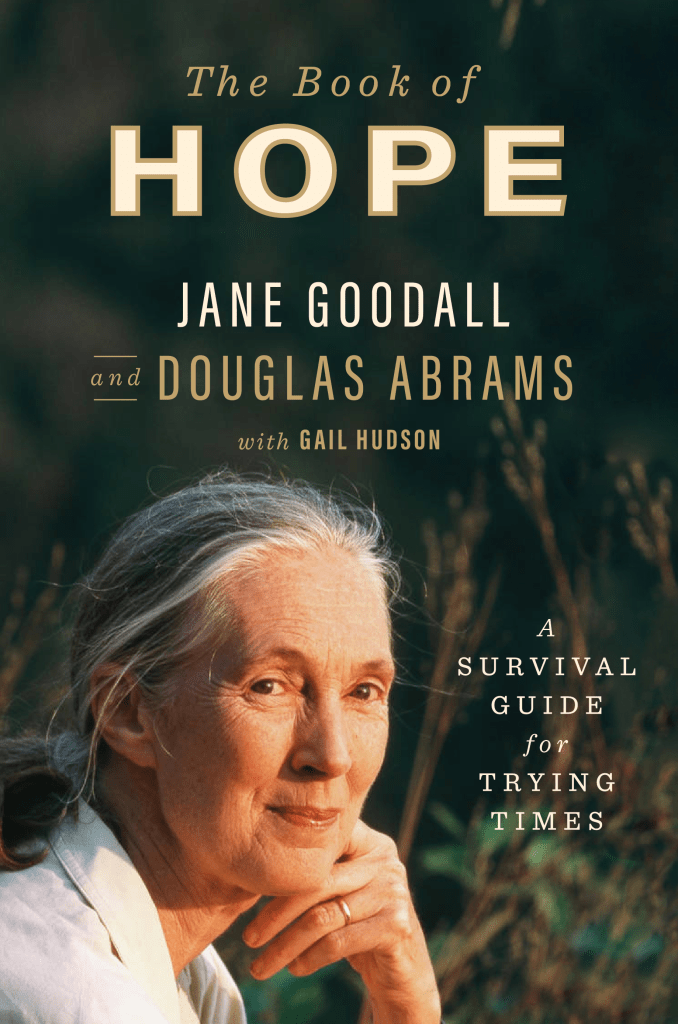
The highlights further stress the deep interconnectedness between humans, nature, and society, suggesting that losing touch with the natural world diminishes both wisdom and resilience. Hope is sustained through social support, shared struggles, and a sense of agency, especially in the face of issues like climate change, inequality, and political instability. Stories of individuals overcoming adversity and communities working together demonstrate that meaningful change emerges from cooperation. The book repeatedly underscores that no one can address these crises alone, and that collective action is essential for survival and progress. In this sense, hope is portrayed as a shared, social force that gains strength when people unite around common goals.
This idea connects closely with Nexus: A Brief History of Information Networks from the Stone Age to AI by Yuval Noah Harari, which argues that humanity’s defining advantage is its ability to cooperate at scale through shared narratives and information systems. While Nexus explains how networks enable large groups to coordinate, The Book of Hopereveals the emotional and moral foundation—hope—that motivates such coordination. The highlights suggest that cooperation, fueled by shared purpose and belief, is what transforms individual efforts into collective impact. Together, the two works argue that humanity’s greatest strength is not intelligence alone, but the ability to align that intelligence toward a common good. In a world of complex global challenges, it is this fusion of hope and cooperation that ultimately determines whether societies can thrive.
 Migo Aguado