The Trouble with Reality: A Rumination on Moral Panic in Our Time

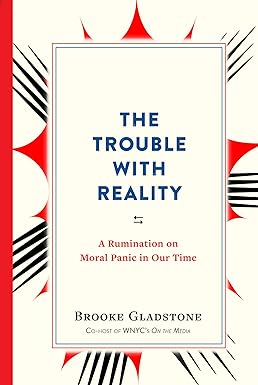
Nobel Prize Recipient Maria Ressa said, “When you don’t have facts, you can’t have truth. Without truth, you can’t have trust. If you don’t have these three (and so), you can’t have a shared reality. You can’t have democracy. This is what we’re living in today.” [1] American Journalist & Media Analyst Brooke Gladstone illustrated the distinction between facts and reality in her book, The Trouble with Reality: A Rumination on Moral Panic In Our Time (2017)She says, “Reality forms after we filter, arrange, and prioritize those facts and marinate them in our values and traditions. Reality is personal.” Veritas is a shared ambition across different institutions: the academe, scientific community, and even in capital markets. When a supposedly shared ambition suddenly becomes a network of conflicting “facts,” how do social actors work together? They don’t–they kill each other.

Continue reading The Trouble with Reality: A Rumination on Moral Panic in Our Time

Biomimicry: Innovation Inspired by Nature

Zappos, an online shoe retailer, equates its success to its corporate culture. They adopted a system of corporate governance called “holocracy.” Since adopting Holacracy in 2014, they evolved in using self-organization to find ways to layer their culture, core values, and people’s focus into the system in a way that works for them[1]. Holacracy is a system of corporate governance whereby members of a team or business form distinct, autonomous, yet symbiotic, teams to accomplish tasks and company goals. The corporate hierarchy concept is discarded in favor of a fluid organizational structure where employees can make critical decisions within their area of authority.[2] Zappos has seen some of its easiest wins with newly formed circles. “New areas of work that didn’t exist in the traditional approach keep getting spun up and started. [These teams are] figuring out what work needs to be done, and starting to execute on that work.” In other words, they’re living and breathing Holacracy from the get-go.[3]

Halocracy is inspired by one of nature’s defining features: self-organization. One of the species that exhibit this is ants. Give a colony of garden ants a week and a pile of dirt, and they’ll transform it into an underground edifice about the height of a skyscraper in an ant-scaled city. Without a blueprint or a leader, thousands of insects moving specks of dirt create a complex, spongelike structure with parallel levels connected by a network of tunnels.[4] Janine Benyus, in her book Biomimicry: Innovation Inspired by Nature (2002), described three more of nature’s tricks of the trade: 

  1. Nature manufactures under life-friendly conditions
  2. Nature has an ordered hierarchical structure, and 
  3. Nature customizes materials through the use of templates.
Continue reading Biomimicry: Innovation Inspired by Nature

The Courage To Be Disliked

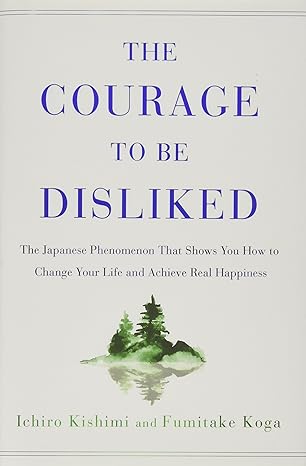
Hyperindividualism permeates our modern culture through advances in precision data science, self-centrism & omnipresence of social media, and the continuous expansion of liberal and Western ideals. The clamor for understanding the Self has risen as we slowly merge with technology. Yuval Noah Harari, a historian, calls this post-human species Homo deus. He foresees humans exceeding biological limitations regarding longevity and innovation competence but argues that it could also mean we will leave our humanity behind to favor progress. To mitigate this risk, Harari argues that our best bet is to develop our emotional intelligence (Hopper, 2017)[1]. For me, emotional intelligence needs a deep understanding of the Self.

Continue reading The Courage To Be Disliked

When Women Lead & Women In Sustainability Leadership

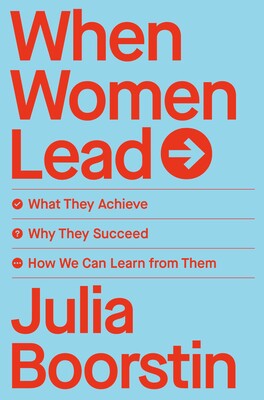
Most of our business cases in graduate school revolve around the economic effects of the pandemic and how organizations survive despite the losses and uncertainty. We briefly discussed how female-led nations are, for some reason, managing the COVID situation better than male-led ones. My professor acknowledged the observation but said we needed scholarly research to determine why this was the case. It was 2020, and research has yet to be produced to verify theories from anecdotal evidence. Fast forward to 2023, I read When Women Lead: What We Achieve, Why We Succeed, and What We Can Learn by Julia Boorstin, an American journalist covering business, media, and the tech landscape. In her book, I finally found a research study.

Continue reading When Women Lead & Women In Sustainability Leadership

Learn2Lead Sustainability

Working in an energy company, I am familiar with sustainability. However, it was when I took the graduate course “Sustainable Business Models” under Professor Paolo Azurin based on the book Reimagining Capitalism* by Harvard Business School Professor Rebecca Henderson that made me pursue a lifelong mission of involvement and learning in the vast field of sustainability. While there are many resources about it, I need to have a structured & practical learning journey, learn from different industry practitioners, and network with like-minded individuals in diverse fields. That’s why I applied for the second cohort of Learn2Lead Sustainability programmed by SustainablePH.


Learn2Lead is a practical 10-week hybrid learning program for sustainability practitioners centered on the theory and practice of sustainability management. Learn2Lead is offered to practitioners in any field or industry who want to develop the skills to become effective stewards of sustainability in their respective organizations. They provide the knowledge and tools to boost skills and improve business acumen within a wide range of sustainability and CSR-related topics tailor-fitted in the Philippine context.

*You can read my notes about the book here: https://migoaguado.com/2022/01/12/reimagining-capitalism/

The Corrosion of Character & Rise of Populism in The Modern Economy

Most modern businesses have exhibited holocracy, creative destruction, and fail-fast systems to adapt to changing environments, keep up with competition, and deliver value to customers as quickly as possible. Moreover, many companies undergo constant structure rationalization. These are embedded in a loose and flexible organizational structure with networked teams working together. Employers are always on the lookout for “team players,” “flexible skills,” and those who can thrive in “ad-hoc environments.” While this modern working culture delivered revenues, built organizational resilience, and globalized the workforce, Richard Sennett, a London School of Economics sociologist, claims that the new capitalism has corroded the human character. 

Continue reading The Corrosion of Character & Rise of Populism in The Modern Economy

Breathing & Rediscovering Lost Knowledge

Breathing might be the most underrated physiological process we undertake, consciously or unconsciously. The advent of mainstream mental health advocacies and studies about peak productivity and performance in a fast-paced lifestyle has made some scholars revisit proper, efficient, and effective breathing. James Nestor called these scholars “pulmonauts” in his book Breath. The most exciting discovery Nestor found out is that breathing techniques have been practiced in ancient times. Western modern medicine could only partially utilize this indigenous knowledge to find cures for modern lifestyle diseases. Modern science has a different framework that could dismiss anecdotal evidence from ancient texts. However, pulmonauts from different disciplines of medicine, speech pathology, dentistry, sports science, psychology, and even performance arts have uncovered ways humans can breathe how we are designed to breathe.  

Continue reading Breathing & Rediscovering Lost Knowledge

The True Believer: Thoughts on the Nature of Mass Movements

Reading The True Believer: Thoughts on the Nature of Mass Movements (2019) by social writer and philosopher Eric Hoffer made me reflect on how leaders enact change in organizations. While Hoffer exemplified contexts in politics, activism, and religion, the same psychological forces play in a corporate setting. His thoughts are aligned with change management guru John Kotter’s 8-Step Change Model (1995). Let’s explore how Hoffer describes mass movements and how Kotter suggests enacting change. In this exploration, let’s qualify Kotter’s model to propose a corporate action similar to a mass movement.

Continue reading The True Believer: Thoughts on the Nature of Mass Movements

Consciousness: Confessions of a Romantic Reductionist

I had no definitive goal when I was new to training and playing sports. Nike said to do it anyway. While there are merits to leaving your couch and lifting weights without overthinking, having no singular intention can muddle your progress. No, I am not even referring to having a program an athlete could follow–sure, one can be guided accordingly. Still, the absence of an explicit intention won’t reap the benefits of a supposedly structured training regimen. An intention is an area of focus you wish to practice or master within a progress framework. Say you want to run a marathon: a program is a set of running sessions of x number of kilometers. An intention is a particular running skill you have your eyes on during a session. This could be breathing, tempo, or pacing. 

Simplifying training with a simple intention is recommended because our brains cannot multitask. Research in neuroscience tells us that the brain doesn’t do tasks simultaneously, as we thought (hoped) it might. Instead, we switch tasks quickly [1]. Neuropsychologist Christof Koch further supports this in his book, Consciousness: Confessions of a Romantic Reductionist. While the book offers an in-depth and technical exploration of the mind, it also puts practical insights for the reader. According to him, our minds generate a “spotlight of attention,” which is treated preferentially and can be detected faster and with fewer errors. With this, expectations, biases, and memory play a more prominent role in higher brain regions, and the impact of the external world weakens correspondingly [2].

Continue reading Consciousness: Confessions of a Romantic Reductionist

How to Stand Up to a Dictator

Once taken for granted under the assumption that it’s humanly innate, storytelling has become a critical competency in humanity’s endeavors toward sustainable development: We want to urge people to participate in development initiatives through the stories we tell. Although painted with urgency, sustainability feels like a marathon mission instead of a shock-and-awe sprint. This is challenging for storytellers: stories need to be compelling enough to encourage action, and compelling stories need to feel urgent. How do we tell relatable, action-oriented stories with a long-term deadline with many protagonists? Stories need to have high stakes, highly urgent, and highly challenging, usually with a “hero” protagonist listeners are rooting for [1].

Maria Ressa, in her book How to Stand Up to a Dictator: The Fight for Our Future (2022), illustrates that journalists have the privilege and responsibility to tell these stories. While many sustainability topics revolve around carbon consumption and technological innovation, Ressa argues that journalism is the bedrock of development. Factual stories create integrity in elections. Integrity in elections creates a healthy democracy. A healthy democracy creates inclusive development.

Continue reading How to Stand Up to a Dictator