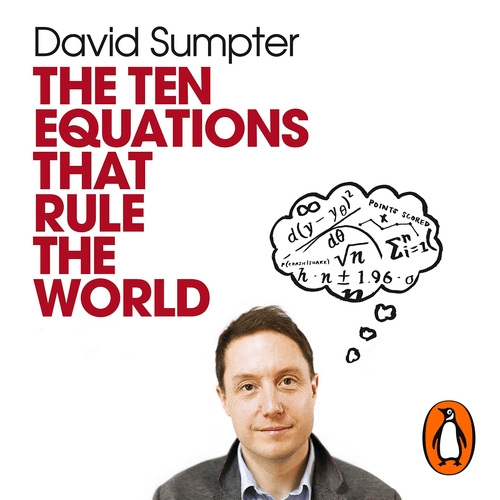
My high school Physics teacher told us not to be afraid of the subject as it is just “reality in mathematical terms.” His words relieved me immediately as my worldview was so simple back then. However, in two decades, adulting, career, and midlife crisis came along with social media, artificial intelligence, and big data. It feels like reality is constructed and deconstructed daily, and I mindlessly observe the constant chaos around me. Revisiting and familiarizing myself with mathematics can help me understand the reality that was once so simple to me back then.
Continue reading The Ten Equations That Rule The WorldAuthor: Migo Aguado
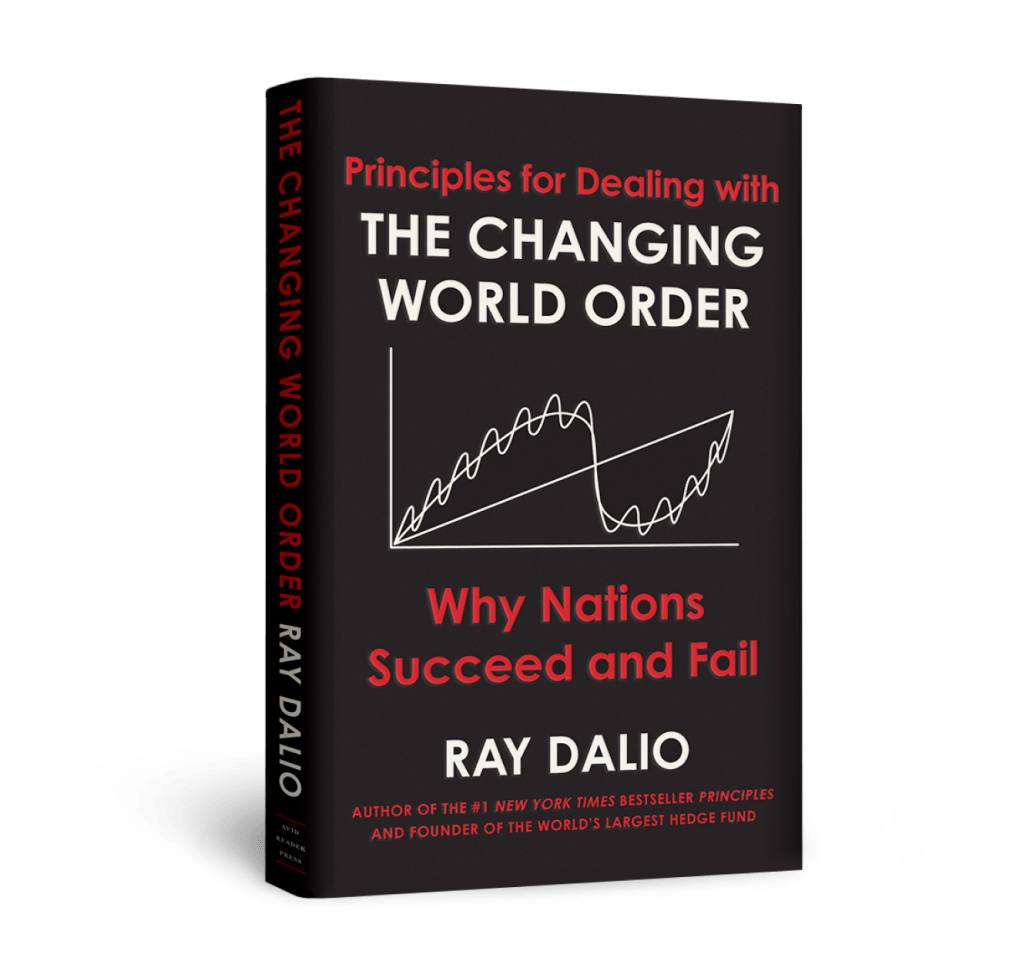
The Changing World Order
These are my notes and favorite highlights from the book Principles For Dealing With The Changing World Order (2021) by Ray Dalio. In addition, I’ll share three excerpts, three suggestions from the author, and three personal reflections.

Three Excerpts
On the cyclical nature of history: As I studied history, I saw that it typically transpires via relatively well-defined life cycles, like those of organisms, that evolve as each generation transitions to the next. By seeing many interlinking cases evolve together, I could see patterns and cause/effect relationships that govern them and could imagine the future based on what I learned. These events happened many times throughout history and were parts of a cycle of rises and declines of empires and most aspects of empires.
Continue reading The Changing World OrderAn Alternative Yet Hopefully Sound and Assuring Perspective
I am neither a history major nor a history expert, but I find history fascinating. The last few books I read are about it. One theory seems to be recurring: history, particularly in politics and capital markets, is cyclical. We don’t see much of it since each cycle transcends one generation. This poses a problem for short-term popular elections because they are won with 1) narrow perspectives vs. sustainable solutions and 2) immediate feelings vs. long-term rationality. Today, our cycle is probably favoring populist leaders, for better or for worse.
But one thing is certain: cycles end. And it’s never the majority or the powerful who breaks the cycle—it’s the small yet progressive faction of individuals. More likely than not, history eventually comes after those who have taken advantage of the system at the expense of the poor, the oppressed, and the marginalized.
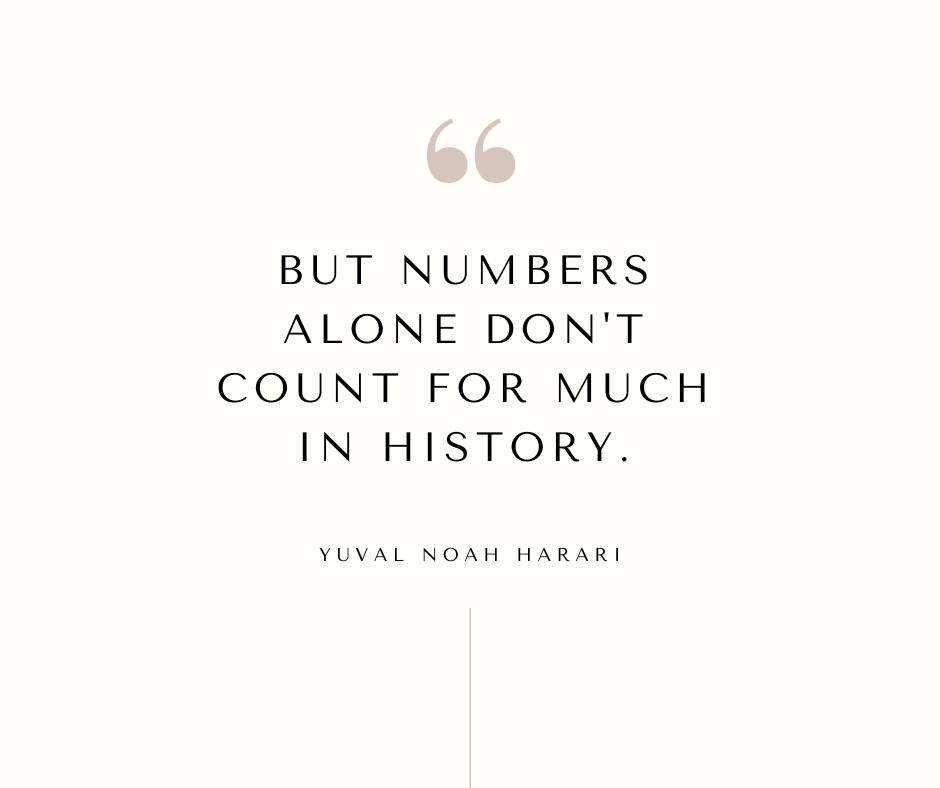
Yuval Noah Harrari, a contemporary historian, argued that “…numbers alone don’t count for much in history. History is often shaped by small groups of forward-looking innovators rather than by the backward-looking masses.”
This is what helps me sleep at night but not because it’s a utopian illusion. Historians saw it: We may repeat history for the worse, but history can also repeat for the better.

To my fellow members of the “weaker” faction of the electorate, we are granted the power to be creative, progressive, and future-oriented. These were explicitly exhibited in campaign rallies. We still have the power to shape history. And no type of election can take this power away from you.
Ang namulat, hindi na muling mapipikit. Mabuhay ang mga tumitindig para sa Pilipinas!
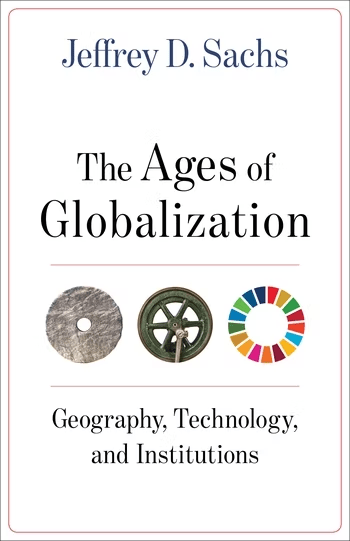
The Ages of Globalization
These are my notes and favorite highlights from the book The Ages of Globalization: Geography, Technology, and Institutions (2020) by Jeffrey D. Sachs. I’ll share three excerpts, three suggestions from the author, and three personal reflections.

Three Excerpts
On addressing Globalization: “Throughout history, it has been important to understand the threats arising from globalization (disease, conquest, war, financial crises, and others) and to face them head-on, not by ending the benefits of globalization, but by using the means of international cooperation to control the negative consequences of global-scale interconnectedness.”
Continue reading The Ages of GlobalizationWhy Nations Fail
These are my notes and favorite highlights from the book Why Nations Fail: The Origins of Power, Prosperity, and Poverty (2012) by Daron Acemoglu and James Robinson. I’ll share three excerpts, three suggestions from the author, and three personal reflections.

Three Excerpts
On the relationship between Economic Institutions and Political Processes: “Economic institutions shape economic incentives: the incentives to become educated, to save and invest, to innovate and adopt new technologies, and so on. It is the political process that determines what economic institutions people live under, and it is the political institutions that determine how this process works.”
Continue reading Why Nations Fail[Personality Assessment] VIA Character Strengths Profile
Character strengths are the core personality traits that define one’s unique identity and make one feel authentic, alive, and engaged in life. This Character Strengths Profile below lists my strengths from highest to lowest based on the positive qualities that are strongest in me. Research shows learning about your strengths and how to express them can make you happier, less stressed, more productive at work, and better connected to others.
I took this test last 02 November 2020. You can take a free test at https://www.viacharacter.org/.
Continue reading [Personality Assessment] VIA Character Strengths ProfileIndustry Transition Strategy For The Maritime Industry
A Marketing Manager colleague who markets to our marine customers has shared a white paper by Mærsk Mc-Kinney Møller Center for Zero Carbon Shipping. She told me that all Sustainability Champions could relate to its decarbonization pathways principles even though the center targets the Marine sector. I’ll share three excerpts, three suggestions from the center, and three personal reflections.

Three Excerpts
- “It (current decarbonization efforts model) shows that if we do not change course the path we are on will lead to around 20% more GHG emissions by 2050. This is very far from the 1.5-degree and well below the 2-degree pathways outlined by the IPCC (Intergovernmental Panel on Climate Change).”
Reimagining Capitalism
These are my notes and favorite highlights from the book Reimagining Capitalism In A World on Fire (2020) by Rebecca Henderson. One of my graduate school electives, Sustainable Business Models, is based on her work. I’ll share three excerpts, three suggestions from the author, and three personal reflections and action points.

Three Excerpts
On the scalability of purposeful firms: “The firms that mastered change were those that had a reason to do so: the ones that had a purpose greater than simply maximizing profits. People who believe that their work has a meaning beyond themselves can accomplish amazing things, and we have the opportunity to mobilize shared purpose at a global scale.”
Continue reading Reimagining CapitalismInternational Business School Competitions Student Testimonial
MARGA Online Business Competition
We may look too casual here but competing in the MARGA Business Simulation platform mimics a boardroom storm. Its exhaustive set of business decision levers in a simulated but dynamic environment allows business school students to experience realistic business scenarios.
Original article: https://aim.edu/news/mba-2021-students-awarded-3rd-runner-marga-online-business-competition
Learn more about AIM’s MBA program here.