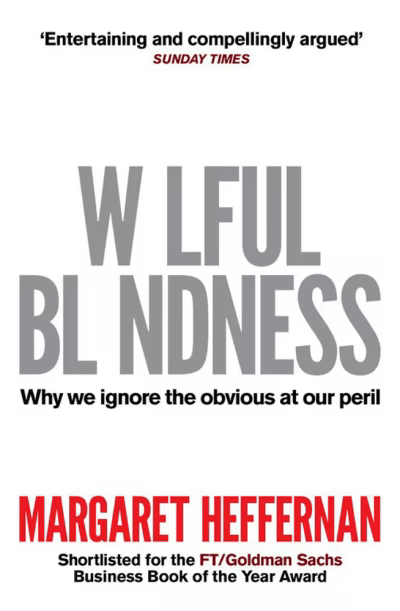
Wilful Blindness

When I knew that a colleague shared the same birthday as mine, I suddenly felt an urge to befriend him even though I had virtually zero knowledge of who he was and what he was like. Familiarity, after all, doesn’t breed contempt–it breeds comfort. The book Willful Blindness (2011) by University professor Margaret Heffernan described more “comforting shortcuts” our brains make: we tend to donate more to victims of typhoons where the typhoon names are similar to ours or choose a profession with starting letters that are the same with ours. Although these phenomena feel like novelty and harmless, Heffernan described serious, deadly, and long-lasting repercussions of our shortcuts and comfort in family, business, and politics.

Continue reading Wilful Blindness

The Class of ’77: China and Critical Junctures

I first encountered the term “critical juncture” in the book Why Nations Fail: The Origins of Power, Prosperity, and Poverty (2012) by Daron Acemoglu and James Robinson. Critical Junctures are significant, rapid, discontinuous changes (Collier & Collier, 1991) and the long-term causal effect or historical legacy of these changes (Flora, 1992). They can be defined as “major events or confluence of factors disrupting the existing economic or political balance in society” (Acemoglu and Robinson (2012); see also Capoccia and Kelemen (2007)). Critical junctures include events such as the discovery of the Americas, the Black Death, and the Arab Spring (Rivas, 2023)[1]. James Mahoney suggests another definition in his book, The Legacies of Liberalism: Critical Junctures, which is a choice point when a particular option is adopted from two or more alternatives. These junctures are ‘critical’ because returning to the initial point becomes progressively more challenging once an option is selected when multiple alternatives are still available.[2] The COVID-19 pandemic can also be considered as one. The book The Class of ’77: How My Classmates Changed China (2022) by one of the top Filipino foreign news correspondents in China, Jaime FlorCruz, describes how China’s cultural revolution during the 1970s became a critical juncture towards the transformation of the Middle Kingdom (中国) to a nation powerhouse it is today. 

Continue reading The Class of ’77: China and Critical Junctures

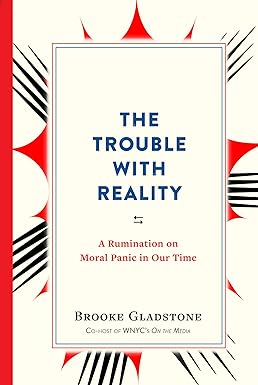
The Trouble with Reality: A Rumination on Moral Panic in Our Time

Nobel Prize Recipient Maria Ressa said, “When you don’t have facts, you can’t have truth. Without truth, you can’t have trust. If you don’t have these three (and so), you can’t have a shared reality. You can’t have democracy. This is what we’re living in today.” [1] American Journalist & Media Analyst Brooke Gladstone illustrated the distinction between facts and reality in her book, The Trouble with Reality: A Rumination on Moral Panic In Our Time (2017)She says, “Reality forms after we filter, arrange, and prioritize those facts and marinate them in our values and traditions. Reality is personal.” Veritas is a shared ambition across different institutions: the academe, scientific community, and even in capital markets. When a supposedly shared ambition suddenly becomes a network of conflicting “facts,” how do social actors work together? They don’t–they kill each other.

Continue reading The Trouble with Reality: A Rumination on Moral Panic in Our Time