
In Man vs Markets, Paddy Hirsch explains financial markets by breaking down the mechanics of debt, derivatives, swaps, securitization, and capital structure, showing how these instruments allow risk to be shifted, priced, and traded. His highlights emphasize that borrowing is not inherently harmful; leverage, private equity buyouts, and derivatives all serve practical economic purposes when used responsibly. Markets, in this view, are systems built from institutions, contracts, and policies that structure how money flows between banks, corporations, governments, and consumers.
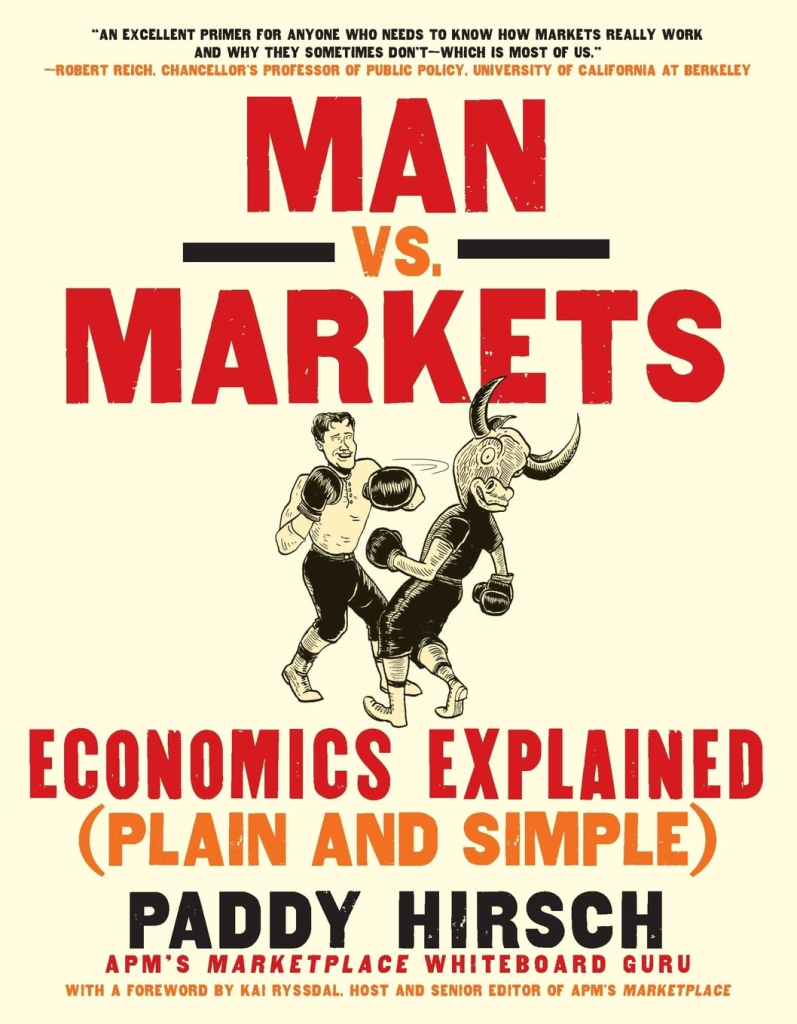
A central theme in Hirsch’s argument is that external forces—especially government policy and regulation—play a decisive role in shaping markets. Fiscal and monetary policy influence liquidity and credit conditions, while regulatory oversight and corporate governance determine how much risk financial actors can take. The highlights describing the 2008 crisis underline how weak regulation, excessive leverage, and failures by gatekeepers such as auditors, regulators, and boards allowed systemic risk to build. Hirsch ultimately suggests that markets repeatedly cycle between excess and reform, and that finding a “Goldilocks” level of regulation is essential to maintaining stability.
This perspective contrasts with The Hour Between Dog & Wolf by John Coates, which argues that the fate of capital markets is driven less by external rules and more by internal human biology—particularly hormones such as testosterone and cortisol that shape traders’ risk-taking, confidence, and fear. Where Hirsch sees markets as systems guided and corrected by policy, institutions, and regulation, Coates sees them as ecosystems of human bodies and emotions, in which boom-and-bust cycles emerge partly from physiological feedback loops in traders themselves. Taken together, the two books offer complementary lenses: Hirsch highlights how rules and structures shape behavior from the outside, while Coates explains how psychology and biology drive behavior from the inside.
 Migo Aguado