CliftonStrengths® Top 5 for Migo Aguado

Test taken last 09 September 2024

Learner®

You love to learn. The subject matter that interests you most will be determined by your other themes and experiences, but whatever the subject, you will always be drawn to the process of learning. The process, more than the content or the result, is especially exciting for you. You are energized by the steady and deliberate journey from ignorance to competence. The thrill of the first few facts, the early efforts to recite or practice what you have learned, the growing confidence of a skill mastered—this is the process that entices you. Your excitement leads you to engage in adult learning experiences—yoga or piano lessons or graduate classes. It enables you to thrive in dynamic work environments where you are asked to take on short project assignments and are expected to learn a lot about the new subject matter in a short period of time and then move on to the next one. This Learner theme does not necessarily mean that you seek to become the subject matter expert, or that you are striving for the respect that accompanies a professional or academic credential. The outcome of the learning is less significant than the “getting there.”

Continue reading CliftonStrengths® Top 5 for Migo Aguado

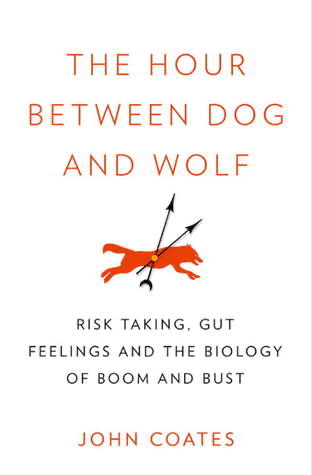
The Hour Between Dog & Wolf: Risk Taking, Gut Feelings, And The Biology of Boom & Bust

Capital markets post-industrial revolution demand intense biological processes that can surpass natural limits. John Coates, a neuroscientist trader and author of The Hour Between Dog & Wolf (2012), argues that the biological storm associated with our work and lifestyle is too much for a human’s biochemical makeup. This is especially true with traders in financial markets who experience winning and losing streaks. Financial risk-taking, he argues, is a biological activity with corresponding medical consequences.

Continue reading The Hour Between Dog & Wolf: Risk Taking, Gut Feelings, And The Biology of Boom & Bust

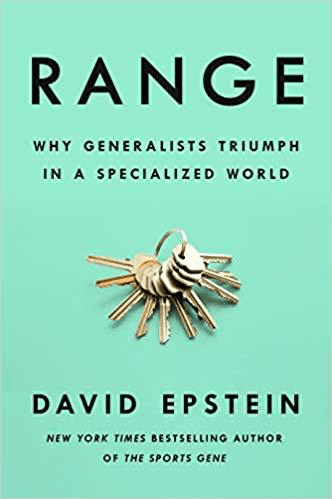
Range: Why Generalists Triumph in a Specialized World

Growing up, I was exposed to Wyeth’s successful marketing campaign for their formula milk, Promil. The Promil kids seemed to have become a benchmark of an entire generation in having a head start and are expected to be successful in their respective fields. Some kids, now all grown-up, have chosen a path different from how they were depicted in the television commercials, albeit still thriving in their own right. While I don’t know what transpired during their teenage years, the Promil kids might have the chance to do other endeavors, termed the “sampling period” by American Journalist David Epstein in his book Range: Why Generalists Triumph in a Specialized World (2019).

Continue reading Range: Why Generalists Triumph in a Specialized World

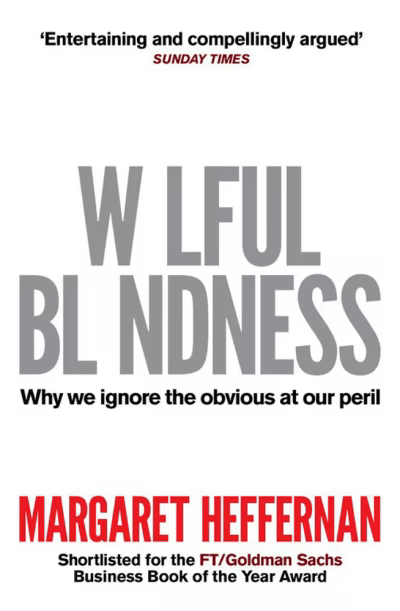
Wilful Blindness

When I knew that a colleague shared the same birthday as mine, I suddenly felt an urge to befriend him even though I had virtually zero knowledge of who he was and what he was like. Familiarity, after all, doesn’t breed contempt–it breeds comfort. The book Willful Blindness (2011) by University professor Margaret Heffernan described more “comforting shortcuts” our brains make: we tend to donate more to victims of typhoons where the typhoon names are similar to ours or choose a profession with starting letters that are the same with ours. Although these phenomena feel like novelty and harmless, Heffernan described serious, deadly, and long-lasting repercussions of our shortcuts and comfort in family, business, and politics.

Continue reading Wilful Blindness

Be Good: How to Navigate the Ethics of Everything

In the Filipino culture, we tend to rationalize an individual’s behavior by saying, “mabait naman siya (s/he’s actually kind).” We start or end with such a statement before or after criticizing someone’s character. This phenomenon could be primarily cultural, as Filipinos are non-confrontational and relationship-based in the culture map. Cognitive dissonance drives this culture to water down criticisms to feel better about oneself or invite mutual understanding. The idea of “good” or “kind” varies in different cultures and schools of thought. We have utilitarianism and hedonism, to name a few. While universal ethics are absent despite significant conformity to a global standard like the Universal Declaration of Human Rights, “what is ethical” is a discourse and not definite.

Continue reading Be Good: How to Navigate the Ethics of Everything

The Class of ’77: China and Critical Junctures

I first encountered the term “critical juncture” in the book Why Nations Fail: The Origins of Power, Prosperity, and Poverty (2012) by Daron Acemoglu and James Robinson. Critical Junctures are significant, rapid, discontinuous changes (Collier & Collier, 1991) and the long-term causal effect or historical legacy of these changes (Flora, 1992). They can be defined as “major events or confluence of factors disrupting the existing economic or political balance in society” (Acemoglu and Robinson (2012); see also Capoccia and Kelemen (2007)). Critical junctures include events such as the discovery of the Americas, the Black Death, and the Arab Spring (Rivas, 2023)[1]. James Mahoney suggests another definition in his book, The Legacies of Liberalism: Critical Junctures, which is a choice point when a particular option is adopted from two or more alternatives. These junctures are ‘critical’ because returning to the initial point becomes progressively more challenging once an option is selected when multiple alternatives are still available.[2] The COVID-19 pandemic can also be considered as one. The book The Class of ’77: How My Classmates Changed China (2022) by one of the top Filipino foreign news correspondents in China, Jaime FlorCruz, describes how China’s cultural revolution during the 1970s became a critical juncture towards the transformation of the Middle Kingdom (中国) to a nation powerhouse it is today. 

Continue reading The Class of ’77: China and Critical Junctures

Our Iceberg Is Melting

E-books have been my preferred book format since I got my first Kindle a few years ago. However, I still have many unread paperbacks at home, and I randomly choose a title to read inside a sauna. One title intrigued me not because of its title but because of its material–it’s glossy and could be water-resistant, perfect for probable wet conditions inside a humid place. Little did I know that I already encountered the author in one of my courses back in graduate school: John Kotter. Our Iceberg Is Melting: Changing and Succeeding Under Any Conditions (2006) is a book by management gurus Holger Rathgeber and John Kotter that transforms Kotter’s Eight Step Process of Successful Change into a visual, compelling, and engaging fable. According to the authors, fables can be powerful because they can take intimidating subjects to more discussable and memorable formats. True enough, the book did not contain any frameworks you can find in business school case rooms. Instead, you can find highly visual and entertaining illustrations of the characters in the fable: penguins. 

Continue reading Our Iceberg Is Melting

Do Hard Things

Different athletic disciplines illustrate various principles of openness and creating space: in basketball, we “open ourselves to the ball.” In yoga, the final pose of savasana encourages yogis to “open themselves to the abundance of the universe.” Conversely, running encourages a “controlled fall” instead of “running tall.” This will give the runner a “perpetual forward propulsion into space.” Lastly, Olympic weightlifting illustrates the “weightless bar” concept, where the barbell “floats” in mid-air after a “triple extension” so the athlete can efficiently receive it in a clean or a snatch. Sports require efficiencies rather than brute strength. Sure, strength, in its traditional definition, can be foundational and become a competitive advantage in the short term. Still, in the long term, those who thrive and win have mastered navigating through discomfort or distress and not by ignoring them through sheer strength. Steve Magness, a coach to some of the best runners in the world, challenged the traditional definition of toughness in his book Do Hard Things: Why We Get Resilience Wrong and the Surprising Science of Real Toughness. 

Continue reading Do Hard Things

As A Man Thinketh

As Man Thinketh (1903) is more than a century old, and it shows. James Allen, the author of the supposed self-help book, harbors on the idea that circumstances are products of mindset: “A man does not come to the almshouse or the jail by the tyranny of fate or circumstance but by the pathway of groveling thoughts and base desires.” Moreover, Allen argues that one can choose how to think and, therefore, can shape his destiny: “A man cannot directly choose his circumstances, but he can choose his thoughts, and so indirectly, yet surely, shape his circumstances.” His adage “So You will be what you will be” is catchy and has its merits but is generally a poorly put generalization in modern self-development studies.

Continue reading As A Man Thinketh

Some People Need Killing

Educated (2018) by Tara Westover is the book that influenced me to go to graduate school and the first book that moved me to tears. The second one is Some People Need Killing: A Memoir of Murder in My Country (2023) by acclaimed journalist and Kate Webb Prize For Exceptional Journalism awardee Patricia Evangelista. The book’s description features Westover’s testimonial about Evangelista’s memoir: “Tragic, elegant, vital. Evangelista risked her life to tell this story.” Westover’s story can mirror the tragedy of Evangelista’s accounts of extrajudicial killings in the Philippines, albeit written with finesse and humanity. It is then vital to tell her stories in a post-truth culture where “slaughter dressed up in bureaucratese dulls the senses, and over time can anesthetize an entire population to the horror happening right where they live.”

Continue reading Some People Need Killing